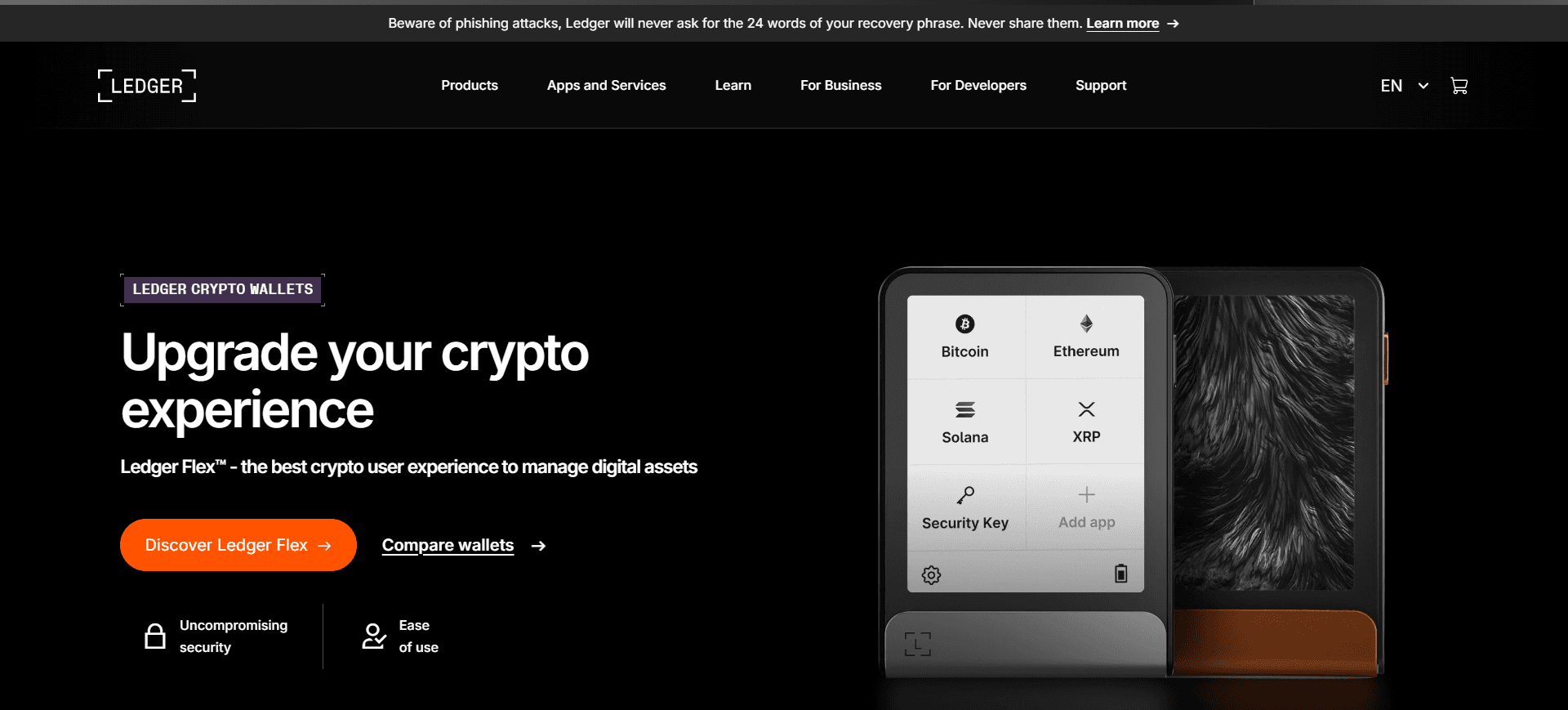
Ledger Live is a software application developed by Ledger to help users securely manage their cryptocurrency assets using Ledger hardware wallets. It acts as the main interface between the user and the blockchain, allowing them to view balances, manage accounts, send and receive crypto, and interact with supported services while keeping private keys offline. Ledger Live is designed to simplify self-custody without compromising security, which is a key concern in the cryptocurrency world.
The primary purpose of Ledger Live is to give users full control over their digital assets. Unlike custodial wallets or exchanges, Ledger Live does not hold user funds or private keys. Instead, all sensitive data is stored and protected inside a Ledger hardware wallet. Ledger Live only facilitates communication between the hardware wallet and the blockchain. This separation between software and private keys is one of the strongest security advantages offered by the Ledger ecosystem.
Ledger Live supports several Ledger devices, including Ledger Nano S Plus and Ledger Nano X. These hardware wallets contain a secure chip that is specifically designed to protect cryptographic secrets. When a transaction is created in Ledger Live, it must be physically approved on the connected device. This means that even if a computer or mobile phone is infected with malware, transactions cannot be completed without the user’s explicit confirmation on the hardware wallet.
Setting up Ledger Live is usually the first step for new Ledger users. After downloading the application on a desktop or mobile device, users are guided through connecting their Ledger hardware wallet. During setup, users are prompted to create or restore a wallet. Creating a wallet involves generating a recovery phrase, which is typically 24 words long. This recovery phrase is the ultimate backup of the wallet and must be stored securely offline. Ledger Live repeatedly warns users that anyone with access to this phrase can control the funds, and that it should never be shared or entered into any website.
Once setup is complete, Ledger Live allows users to add cryptocurrency accounts. Each account corresponds to a specific blockchain and address derived from the private keys stored in the hardware wallet. Users can create multiple accounts for the same asset if desired, which can be useful for organizing funds or separating personal and business holdings. Account names can be customized, making portfolio management clearer and more structured.
The main dashboard of Ledger Live provides a clear overview of the user’s portfolio. It shows the total value of all assets combined, as well as individual balances for each cryptocurrency. Users can also view recent transactions and see how their portfolio value changes over time. Market data such as price movements and percentage changes is included to help users understand how market conditions affect their holdings. While Ledger Live is not designed for active trading, it offers enough insight for users to stay informed.
One of the most important functions of Ledger Live is sending and receiving cryptocurrency. Receiving funds is done by generating a wallet address for a selected account. Ledger Live requires the user to verify the address on the hardware wallet screen before using it. This step ensures that the address displayed on the computer or phone has not been altered by malicious software. Once verified, the address can be safely shared to receive funds.
Sending cryptocurrency involves entering the recipient’s address, selecting the amount, and choosing transaction fees. Ledger Live provides fee estimates based on current network conditions. In many cases, users can choose between different transaction speeds, depending on how quickly they want the transaction to be confirmed. Before the transaction is broadcast, all details must be confirmed on the Ledger device. This physical approval process is a key part of Ledger’s security model and helps protect users from unauthorized transfers.
Ledger Live also includes tools for managing blockchain applications on the hardware wallet. Each supported blockchain requires a specific app to be installed on the Ledger device. Because hardware wallets have limited storage space, users may need to install and remove apps depending on which assets they want to manage. Ledger Live makes this process simple by providing an app manager where users can install, update, or uninstall apps. Importantly, uninstalling an app does not affect funds, as private keys remain securely stored on the device.
Another significant feature of Ledger Live is its ability to update device firmware. Firmware updates are essential for maintaining security and compatibility with new blockchain features. Ledger Live notifies users when updates are available and guides them through the update process. Each update requires confirmation on the hardware wallet, ensuring that only authorized actions are performed. Regular updates help protect users from newly discovered vulnerabilities.
Ledger Live has grown to include additional features beyond basic wallet management. One of these features is staking. Staking allows users to earn rewards by supporting proof-of-stake blockchain networks. Ledger Live enables staking for certain cryptocurrencies directly from the hardware wallet. Users can delegate their tokens to validators, monitor staking rewards, and manage their staking positions without giving up custody of their assets. This approach combines convenience with security.
In addition to staking, Ledger Live provides access to cryptocurrency swapping through integrated service providers. This allows users to exchange one cryptocurrency for another without transferring funds to an external exchange. While Ledger Live itself does not perform the exchange, it connects users to third-party services that handle the transaction. All swaps still require confirmation on the hardware wallet. Users should be aware of fees, exchange rates, and potential risks associated with these services.
Ledger Live is available on both desktop and mobile platforms. Desktop versions support Windows, macOS, and Linux, while mobile versions are available for iOS and Android. The mobile app is especially useful for users who want to manage their assets while traveling. When used with a Bluetooth-enabled Ledger device, users can sign transactions directly from their smartphones. Despite the convenience, the same security standards apply, as private keys never leave the hardware wallet.
Privacy is an important consideration in Ledger Live’s design. Users do not need to create an account or submit personal information to use the application. Most portfolio data is stored locally on the user’s device. While Ledger Live must connect to the internet to fetch blockchain data and prices, it aims to limit unnecessary data collection. This focus on privacy aligns with the broader principles of decentralization and user control in cryptocurrency.
Ledger Live also helps educate users about safe practices. The application includes warnings about phishing attacks, fake apps, and scam messages. It clearly states that Ledger will never ask for recovery phrases or private keys. These reminders are critical, as social engineering remains one of the most common ways users lose funds. By reinforcing good security habits, Ledger Live helps users protect themselves beyond just technical safeguards.
As blockchain technology continues to evolve, Ledger Live is regularly updated to support new assets and features. Ledger works to integrate additional networks, tokens, and improvements based on user feedback and technological changes. This ongoing development ensures that Ledger Live remains relevant in a rapidly changing industry. Users benefit from broader asset support and improved functionality over time.
Despite its many strengths, Ledger Live is not a complete replacement for all crypto tools. Some advanced blockchain interactions, such as certain decentralized applications or complex smart contract operations, may require external wallets or platforms. Ledger Live focuses on providing a secure and user-friendly core experience rather than covering every possible use case. For most users, however, it offers more than enough functionality for daily asset management.
The importance of Ledger Live lies in its role in promoting self-custody. By making hardware wallets easier to use, it encourages users to take responsibility for their own funds instead of relying on centralized exchanges. This reduces exposure to risks such as exchange hacks, withdrawals freezes, or account restrictions. Ledger Live empowers users to own and manage their assets independently.
For long-term investors, Ledger Live provides a secure environment for storing digital assets over extended periods. For everyday users, it offers practical tools for sending, receiving, and tracking cryptocurrency. The combination of offline key storage, transaction verification, and a clean interface makes it suitable for a wide range of users.
In conclusion, Ledger Live is a powerful and versatile application designed to work alongside Ledger hardware wallets. It enables secure management of cryptocurrencies while keeping private keys protected at all times. Through features such as portfolio tracking, transaction management, app installation, staking, and education, Ledger Live delivers a balanced approach to security and usability. As cryptocurrency adoption grows, Ledger Live remains a trusted solution for users seeking safe and independent control over their digital assets.